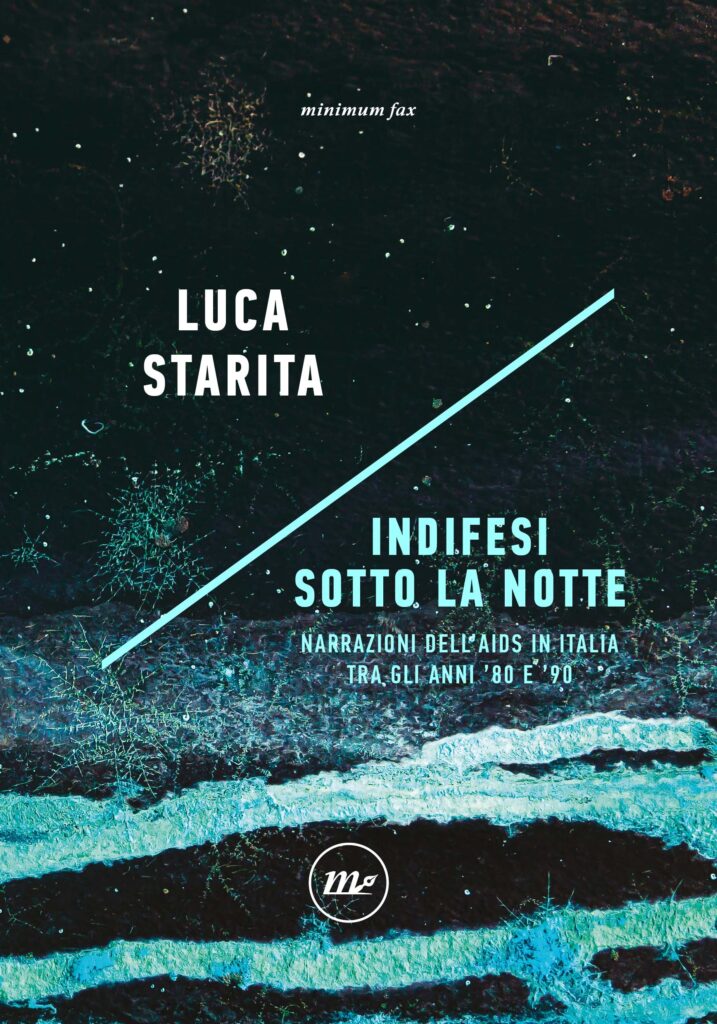
In 1982, the first case of AIDS was diagnosed in Italy. By 1984, there were eighteen cases. By May 1991, the number had exceeded nine thousand and was continuing to rise. The spread of the HIV virus was accompanied by fear, misinformation and social stigma, which affected homosexuals and drug users in particular; they found themselves isolated, blamed, inadequately cared for by the health system and often lacking even a social and emotional support network.
The first person in Italy to break the agonising silence surrounding the epidemic was Giovanni Forti, a journalist who had contracted the virus and who, in 1992, gave an account of his illness in an article in *L’Espresso*. He died that same year. His husband, the journalist Brett Shapiro, recounts Forti’s story in the book *L’intruso*, candidly depicting the ordeal, the pain, but also the love, the care, and ultimately the loss. Taking this text as his starting point, Luca Starita analyses the narratives – literary and otherwise – that were produced about AIDS in Italy during the 1980s and 1990s, whilst also describing how politics and society addressed or, more often, sought to ignore the problem.
Through the writings of authors such as Tondelli, Fortunato, Ferraresi and Bellezza, and the testimonies of people who lived through those years (including, amongst others, Guadagnino, Maraini, Gheno, Giartosio and Scarlini), Starita paints a lucid and harrowing picture of how the HIV virus terrorised, scandalised and destabilised our society, which was not – and is not – ready to face death head-on or to engage with those who are different, who have always been used as scapegoats to exorcise and ward off everything that frightens us.